Cowboy School: A Bold Western Typeface for Authentic Branding
When you're building a brand or designing a project that needs to feel rugged, classic, and unmistakably western, typography does more heavy lifting than most people realize. The right typeface sets a mood before anyone reads a single word. Cowboy School is a premium font that steps into this space with confidence, drawing from vintage western signage and old-school collegiate lettering to deliver something that feels both nostalgic and fresh.
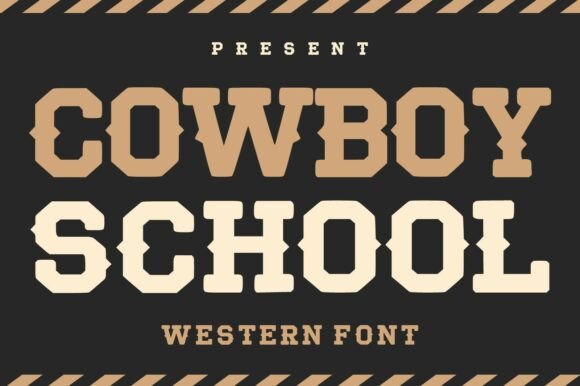
At its core, Cowboy School is a display typeface with strong slab-style characters. The letterforms carry weight and presence without feeling cluttered or overly ornate. There's a ruggedness baked into the design that recalls hand-painted shop signs from frontier towns, old rodeo posters, and the kind of collegiate athletics branding that dominated mid-century American campuses. Yet the execution is clean enough to feel intentional and modern rather than kitschy or dated.
Understanding the Visual Character of Cowboy School
The personality of Cowboy School comes from its balance between toughness and legibility. Each character has substantial stroke width and sturdy serifs, giving text a grounded, authoritative appearance. The proportions feel deliberate—wide enough to command attention on a poster but structured enough to hold together at smaller sizes when used thoughtfully.
What makes this typeface stand out among other western-inspired fonts is its restraint. Some display fonts in this category lean so hard into decorative flourishes that they become illegible or feel like costume pieces. Cowboy School avoids that trap. The design nods to tradition without drowning in it, which means you can use it across a range of contexts without it looking like a theme park prop.
The overall appeal lies in its versatility as a creative font. It carries the spirit of the American West—adventure, independence, craftsmanship—but packages it in a way that works for contemporary design projects. Whether you're designing a logo for a craft distillery, laying out a menu for a barbecue restaurant, or creating social media graphics for an outdoor apparel brand, Cowboy School brings an authentic visual voice to the table.
Where Cowboy School Works Best
Display fonts live or die by context, and Cowboy School thrives in specific environments. Here are the spaces where this typeface genuinely shines:
- Logo design and brand identity: If you're building a brand that leans into heritage, craftsmanship, or western culture, Cowboy School gives your wordmark immediate character. It works particularly well for businesses in food and beverage, outdoor recreation, artisan goods, and lifestyle brands with a rugged edge.
- Poster and editorial design: Event posters, magazine covers, book titles, and album art all benefit from a typeface that can fill space with personality. Cowboy School handles large-scale display use with ease, making it a strong choice for any editorial design project that needs visual punch.
- Packaging design: Think hot sauce labels, craft beer bottles, jerky packaging, or specialty coffee bags. When a product's identity is tied to authenticity and tradition, this typeface reinforces that message visually before the customer even picks up the box.
- Apparel and merchandise: T-shirts, hats, patches, and branded merchandise often rely on bold typography to carry the design. Cowboy School's slab-style lettering holds up well on fabric and physical goods, maintaining clarity and impact.
- Digital and web design: Used as a headline or hero text font on websites, Cowboy School can anchor a homepage with strong visual hierarchy. It pairs well with cleaner body fonts and works effectively in banner graphics and social media graphics where you need to stop someone mid-scroll.
The font also finds a natural home in personal projects. If you're a crafter designing invitations for a rustic wedding, a hobbyist making signs for a home bar, or a content creator developing a YouTube channel brand, Cowboy School gives you a polished starting point without requiring custom lettering skills.
How Typography Like Cowboy School Shapes Perception
Every typeface carries psychological weight. The fonts you choose for a project influence how audiences perceive credibility, quality, and personality before they engage with your actual content. Cowboy School, as a western-inspired display font, taps into associations with authenticity, strength, and tradition.
When used in brand identity work, it signals that a company values craftsmanship and heritage. This perception can be powerful for small businesses competing against larger, more generic brands. A well-chosen typeface like Cowboy School helps create instant recognition and emotional connection—two things that are difficult to manufacture with stock fonts or overused typefaces.
Visual hierarchy is another area where a strong display font earns its place. Headlines set in Cowboy School naturally draw the eye and establish a clear reading order on the page. When paired with a neutral sans serif font or a clean serif font for body text, the contrast creates a dynamic layout that guides readers through your content without confusion.
Consistency across touchpoints matters too. When you use Cowboy School across your logo, website headers, social media templates, and print materials, you build a cohesive visual language. That consistency reinforces professionalism and makes your brand more memorable over time.
Practical Guidance for Using Cowboy School Effectively
Choosing a typeface is only half the equation. Using it well is what separates amateur design from professional results. Here are some practical considerations:
- Evaluate project fit first. Not every project calls for a western display font. Cowboy School is ideal when your brand or content has a genuine connection to western culture, heritage, ruggedness, or vintage Americana. If the connection feels forced, the design will too.
- Test font pairings carefully. A display font like Cowboy School needs a partner. Pair it with a simple sans serif font for body copy—something like a geometric or grotesque style that won't compete for attention. Avoid pairing it with another decorative or script font, which creates visual noise.
- Review the full character set. Before committing, check what's included. Does the font offer multiple weights, alternates, or stylistic variations? Understanding the full range of design assets included with your purchase helps you get maximum value and creative flexibility.
- Mind the readability. At large sizes, Cowboy School reads beautifully. At small sizes—especially on screens—slab serif display fonts can lose clarity. Use it for headlines and short bursts of text, not paragraphs. For body copy, switch to a more legible typeface designed for extended reading.
- Understand commercial licensing. If you're using Cowboy School for client work, merchandise, or products you sell, make sure your license covers commercial use. Most premium font foundries offer clear licensing terms, but it's worth verifying before you launch a project.
One common mistake is overusing a display font. If every element on a page is set in Cowboy School, the design becomes exhausting and loses impact. Think of it as a spice rather than the main ingredient—use it strategically to accent and elevate, not overwhelm.
Bringing It All Together
Cowboy School occupies a specific and valuable niche in the world of modern typography. It's not trying to be everything to everyone, and that's precisely its strength. For designers, marketers, entrepreneurs, and creators working on projects that demand a bold, western-inspired visual voice, this typeface delivers character and reliability in equal measure.
The best typography decisions happen when you match a font's personality to your project's story. If that story involves wide-open spaces, honest craftsmanship, or a connection to American visual tradition, Cowboy School deserves a serious look. Pair it wisely, use it with intention, and it becomes more than a font—it becomes a foundational piece of your brand identity and creative toolkit.